

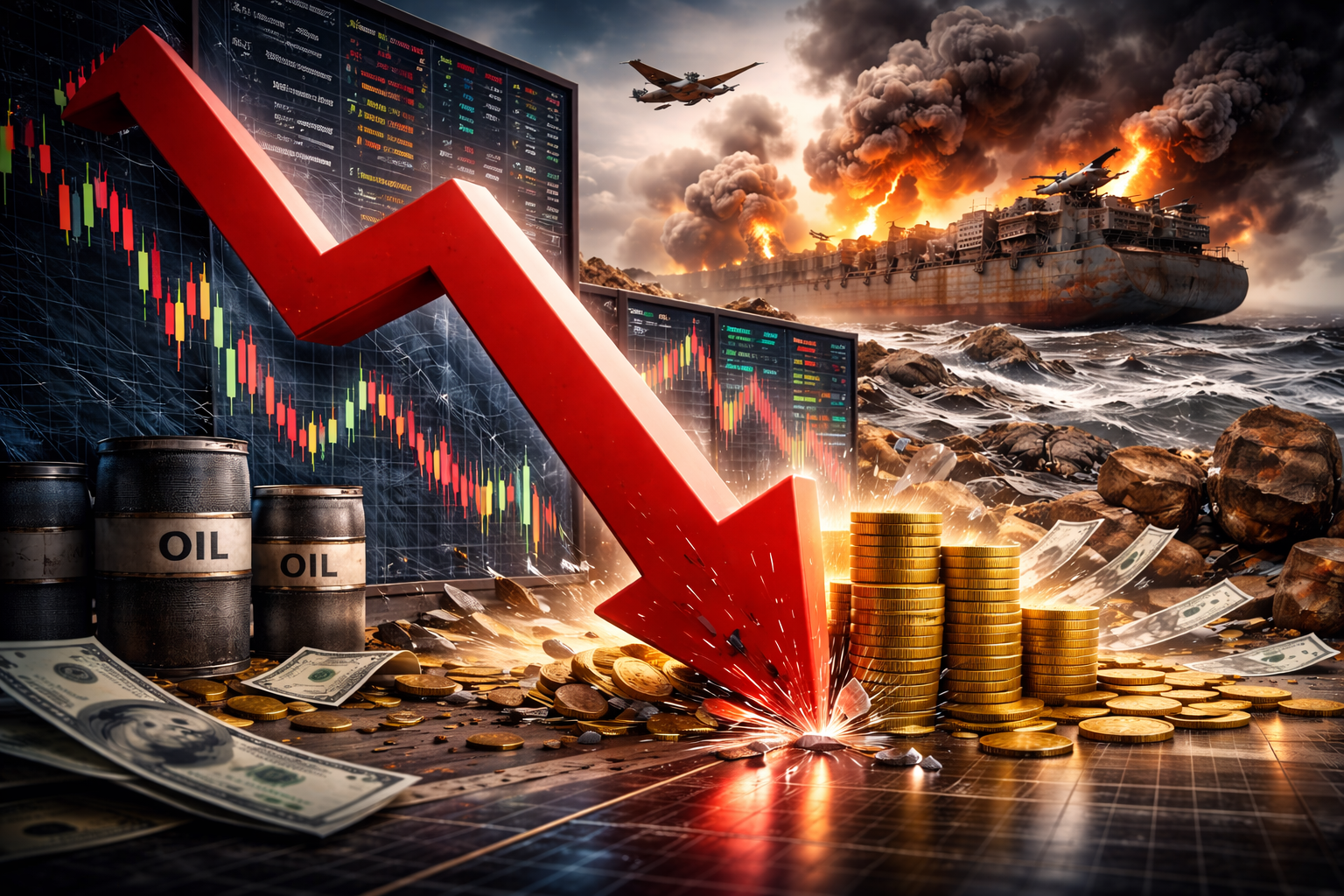
The growing conflict in the Middle East is no longer just a regional military crisis. It is now sending shockwaves through the global economy. As tensions between the United States, Israel, and Iran escalate, financial markets around the world are responding with uncertainty, volatility, and rising fears about energy supplies.
Investors across Europe, Asia, and North America are closely watching developments in the region. The possibility of prolonged conflict has created anxiety about oil supplies, global trade routes, and economic stability.
Global Markets Slide as Investors Turn Cautious
Following the latest developments in the Middle East, stock markets in several major economies experienced noticeable declines. Investors moved quickly to reduce risk exposure as the situation became more unpredictable.
In Europe, major indices such as Germany’s DAX and France’s CAC 40 fell as investors reacted to geopolitical tensions. London’s FTSE 100 also dropped as concerns about energy prices and economic disruption intensified.
Asian markets were affected as well. Japan’s Nikkei and South Korea’s Kospi showed downward movement as investors became cautious about global economic stability. Financial analysts note that markets tend to react strongly to geopolitical uncertainty, especially when it involves major oil-producing regions.
The situation highlights how closely global financial systems are connected to political and military developments.
Oil Prices Surge as Supply Concerns Grow
Perhaps the most immediate economic impact of the conflict has been seen in global energy markets. Oil prices have climbed sharply as fears grow about potential disruptions in supply.
A key concern for energy traders is the security of the Strait of Hormuz. This narrow waterway near Iran is one of the most important oil transit routes in the world. Nearly one-fifth of global oil shipments pass through this channel every day.
Any military escalation in or around this area could interrupt the movement of oil tankers, pushing prices even higher and potentially triggering energy shortages in some regions.
As tensions increased, benchmark crude prices rose significantly, reflecting the risk that the conflict could affect global energy supply chains.
Investors Seek Safe Assets
During periods of geopolitical instability, investors often move their money into safer assets. This trend has already begun to appear in financial markets.
Gold prices have shown signs of strengthening as investors seek traditional safe-haven investments. Government bonds in stable economies are also attracting increased demand.
At the same time, several sectors in the stock market have faced heavy selling pressure. Technology companies, airlines, and travel businesses are particularly vulnerable because geopolitical tensions can disrupt international travel and economic growth.
Defense Industry Stocks Rise
While many industries are facing uncertainty, the defense sector has experienced a different trend.
Shares of major defense contractors have moved upward as investors anticipate increased military spending from governments around the world. When geopolitical tensions escalate, countries often increase defense budgets, which can benefit companies involved in military equipment and technology.
This shift reflects a common pattern in financial markets during periods of global conflict.
Economic Risks Beyond the Battlefield
Economists warn that the economic impact of the conflict could extend far beyond the Middle East. If the situation continues to escalate, it could influence several critical areas of the global economy.
First, higher oil prices could push inflation upward in many countries. Energy costs affect transportation, manufacturing, and food production, meaning rising oil prices can spread quickly through the entire economy.
Second, disruptions to global shipping routes could slow international trade. The Middle East is a strategic crossroads for energy transportation and maritime trade, and instability in the region can ripple across global supply chains.
Third, investor confidence could weaken if the conflict continues for an extended period. Financial markets depend heavily on stability and predictability. Prolonged geopolitical tension often leads to cautious investment behavior.
Governments and Central Banks Monitoring the Situation
Governments and financial institutions worldwide are monitoring the situation closely. Central banks are particularly concerned about how rising energy prices could affect inflation and economic growth.
Policy makers are preparing for possible market instability, while diplomatic efforts continue to focus on preventing further escalation in the region.
Although financial markets frequently react sharply to geopolitical events, analysts note that the long-term economic impact will depend largely on how the conflict develops in the coming weeks.
Conclusion
The growing confrontation involving Iran, the United States, and Israel has begun to influence global financial markets and energy prices. Investors are responding cautiously as uncertainty increases across the Middle East.
Rising oil prices, falling stock markets, and shifting investment strategies all reflect the economic risks tied to geopolitical instability. While financial markets may recover if tensions ease, the current situation highlights how closely the global economy is linked to political developments in critical regions.
For now, investors and governments around the world remain alert, knowing that the direction of this conflict could shape economic conditions far beyond the battlefield.