

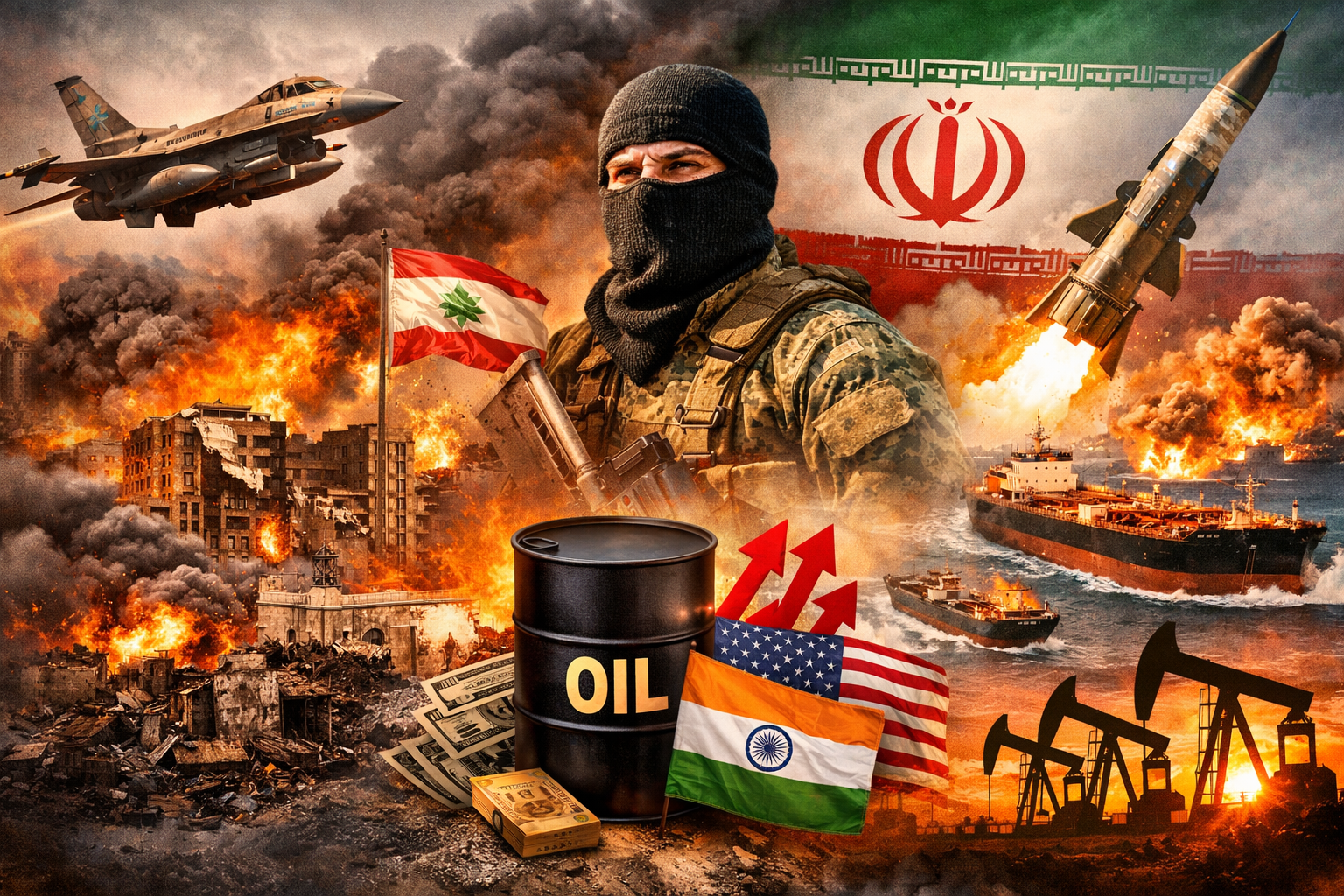
The geopolitical landscape in the Middle East has entered a dangerous new phase as military operations expand beyond Iran’s borders and global energy markets begin to react. A combination of Israeli airstrikes in Lebanon, escalating tensions involving Iran, and emergency policy decisions by the United States regarding global oil supply has created a volatile situation with worldwide implications.
From military confrontations to energy security concerns, the unfolding developments highlight how quickly regional conflicts can transform into global crises.
Israeli Airstrikes Target Southern Beirut
One of the most dramatic developments occurred when Israeli forces launched heavy airstrikes on southern Beirut, a densely populated area of Lebanon widely considered a stronghold of Hezbollah.
According to military statements, Israel issued evacuation warnings to residents in several neighborhoods before the strikes began. Despite these warnings, the bombardment triggered widespread panic as thousands of civilians rushed to leave the targeted districts.
Southern Beirut, particularly the suburbs known as Dahiyeh, has long been associated with Hezbollah’s political and military infrastructure. Israeli officials claim the strikes were aimed at disabling command centers, weapons depots, and strategic facilities connected to the militant organization.
The attack represents one of the largest Israeli military operations in Beirut in recent years and signals a widening battlefield that now extends beyond Iran itself.
Hezbollah’s Role in the Expanding Conflict
Hezbollah, a powerful armed group and political movement in Lebanon, is widely viewed as Iran’s most capable regional ally. The group possesses an extensive arsenal of rockets, drones, and missiles and has fought several wars with Israel over the past decades.
Recent reports indicate that Hezbollah forces have increased cross-border attacks into northern Israel, firing rockets and drones at military positions and infrastructure.
Israel considers these actions a direct escalation and has vowed to eliminate what it calls a growing threat along its northern frontier.
Military analysts warn that if Hezbollah becomes fully involved in the conflict, the region could face a far larger war involving multiple states and armed groups.
Iran’s Regional Strategy and Retaliatory Actions
Iran has strongly condemned Israeli military operations and has accused both Israel and the United States of provoking a broader war.
In recent days, Iran has reportedly launched drone and missile attacks targeting locations connected to American military infrastructure in several Gulf states. These include areas where U.S. troops are stationed as part of regional security arrangements.
Iran’s strategy appears designed to demonstrate its ability to retaliate across a wide geographical area while also sending a signal to Washington and its allies that further escalation could have serious consequences.
Military observers believe Tehran is attempting to balance retaliation with caution in order to avoid triggering a direct full-scale war with the United States.
U.S. Decision on Indian Purchases of Russian Oil
While military tensions dominate headlines, a separate development in global energy policy has also drawn attention.
The United States has temporarily allowed India to continue purchasing Russian oil despite previous sanctions targeting Moscow’s energy exports.
This decision comes amid rising fears that the Middle East conflict could severely disrupt global oil supply routes, particularly through the Strait of Hormuz — a critical maritime corridor through which a large portion of the world’s oil passes.
Energy markets are highly sensitive to instability in this region. Even the threat of disruption can cause dramatic price fluctuations.
By allowing India to maintain access to Russian oil supplies for a limited period, Washington appears to be attempting to prevent a sudden shock to global energy markets.
Rising Oil Prices Shake Global Markets
As tensions escalate, oil markets have already begun reacting.
Brent crude prices have surged close to $90 per barrel as traders factor in the possibility of prolonged conflict and supply disruptions. Some analysts warn that if the conflict intensifies or spreads further, prices could climb significantly higher.
The Strait of Hormuz is particularly important in this context. Nearly one-fifth of the world’s petroleum supply travels through this narrow waterway between Iran and Oman.
Any military confrontation affecting shipping routes in this area could trigger a global energy crisis.
Energy experts note that even temporary disruptions could have cascading effects on inflation, transportation costs, and economic growth worldwide.
Diplomatic Efforts Struggle to Contain Escalation
International leaders have begun calling for restraint as the situation grows more dangerous.
European governments, Gulf states, and several international organizations have urged all sides to avoid further escalation and to pursue diplomatic solutions.
However, the current trajectory suggests that diplomacy may struggle to keep pace with the rapid developments on the battlefield.
The involvement of multiple actors — including Israel, Iran, Hezbollah, and potentially other regional forces — complicates efforts to de-escalate the crisis.
Each side views the conflict through its own security concerns, making compromise difficult in the short term.
Humanitarian Concerns Grow
Beyond military and economic consequences, humanitarian concerns are also rising.
The strikes on Beirut have forced thousands of civilians to flee their homes, adding to Lebanon’s already severe economic and political crisis.
Lebanon has been struggling with financial collapse, political instability, and infrastructure challenges for years. Large-scale military operations could further strain the country’s fragile system.
Human rights groups have warned that if fighting intensifies, civilian populations in both Lebanon and Israel could face increasing danger.
A Conflict With Global Consequences
What began as a confrontation involving Iran and its adversaries is rapidly evolving into a complex regional conflict with global implications.
The Middle East remains one of the world’s most strategically important regions due to its energy resources, shipping routes, and geopolitical alliances.
Any prolonged war involving major regional powers could have far-reaching consequences — affecting international trade, global energy markets, and the broader balance of power.
For now, the situation remains fluid, with military developments unfolding rapidly and diplomatic efforts racing to prevent a wider catastrophe.
Conclusion
The latest developments — Israeli airstrikes in Beirut, Iran’s retaliatory posture, and emergency energy decisions by the United States — demonstrate how interconnected military conflict and global economics have become.
As tensions continue to rise, the world is watching closely to see whether the crisis will stabilize through diplomacy or escalate into a much larger confrontation.
What happens next in the Middle East may not only shape the region’s future but also influence the stability of global markets and international security for years to come.
Check More:
- Global Stock Markets React to Iran Conflict as Energy Fears Rise
- US-Israel Strikes on Iran Escalate Middle East Conflict