

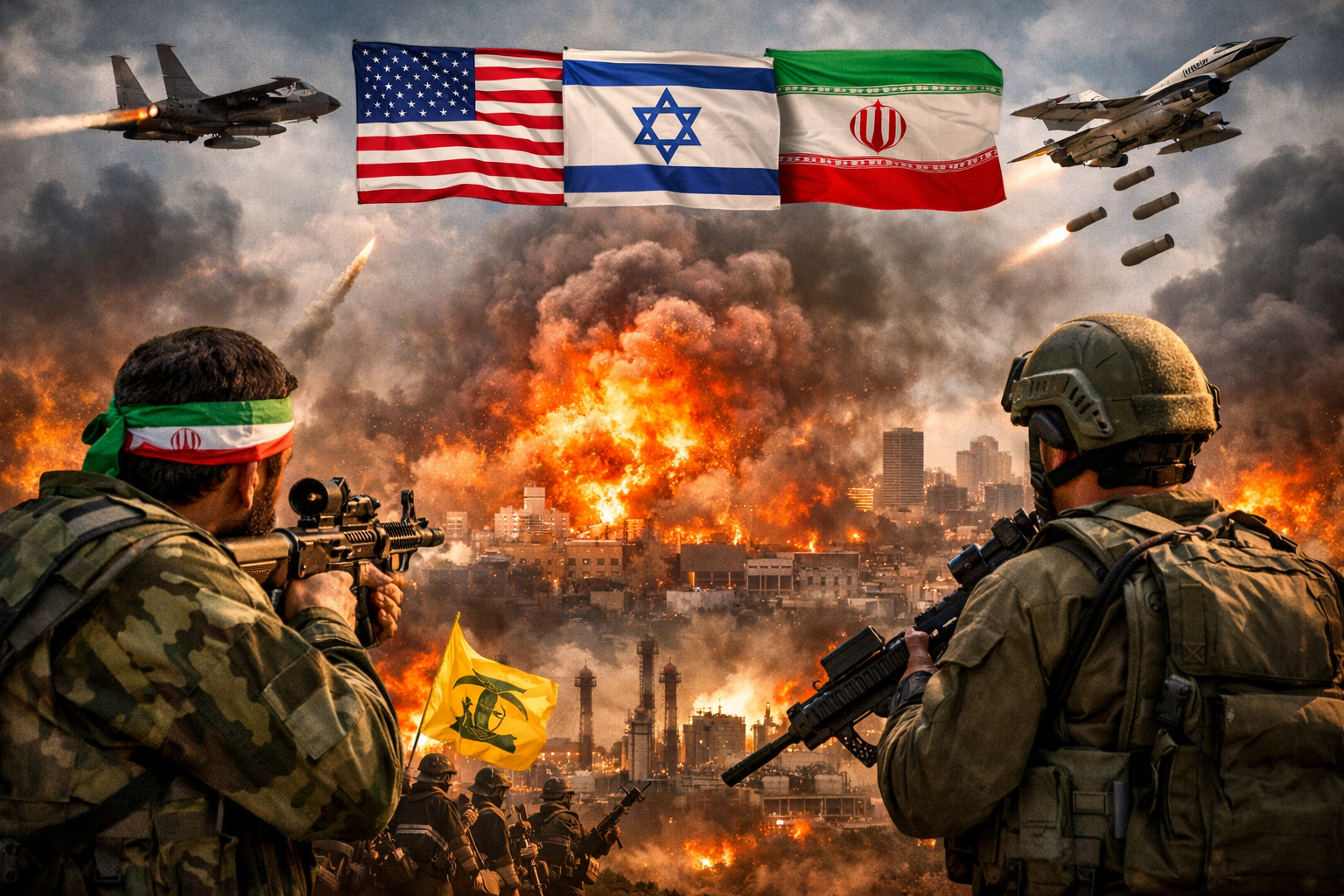
The situation in the Middle East has become extremely tense after the United States and Israel launched major military strikes against Iran. The attacks targeted several locations across Iran, including areas near the capital , where explosions and airstrikes were reported.
According to reports, the strikes were aimed at military and strategic facilities. Iranian authorities say hundreds of people have been killed or injured since the attacks began, raising fears that the conflict could turn into a wider regional war.
Iran and Its Allies Respond
Iran has started responding with missile and drone attacks targeting Israeli and American interests in the region. The conflict is no longer limited to Iran and Israel, as Iran’s regional allies have also entered the confrontation.
The Lebanese armed group launched rockets and drones toward Israel from southern Lebanon. In response, Israel carried out heavy airstrikes in parts of Lebanon, including areas near , causing significant destruction and forcing many civilians to flee their homes.
Conflict Spreading Across the Region
The war is now affecting several countries across the Middle East. Tensions have been reported in Gulf states such as , , , and , where security has been heightened around military bases and oil facilities.
There are also reports of attacks or threats targeting energy infrastructure in the region, which has raised serious concerns about global oil supply and economic stability.
Global Impact and Growing Concerns
The escalation is already affecting global markets and international travel. Several airlines have cancelled or rerouted flights over parts of the Middle East due to security risks.
International leaders and organizations are warning that if the fighting continues to expand, it could trigger a much larger regional conflict involving multiple countries.
Conclusion
What started as a direct confrontation between the United States, Israel, and Iran is quickly expanding across the Middle East. With Iran, Israel, Hezbollah, and several regional actors now involved, the situation remains highly volatile and unpredictable. Many analysts fear that without diplomatic intervention, the conflict could escalate into a broader war that may destabilize the entire region.