

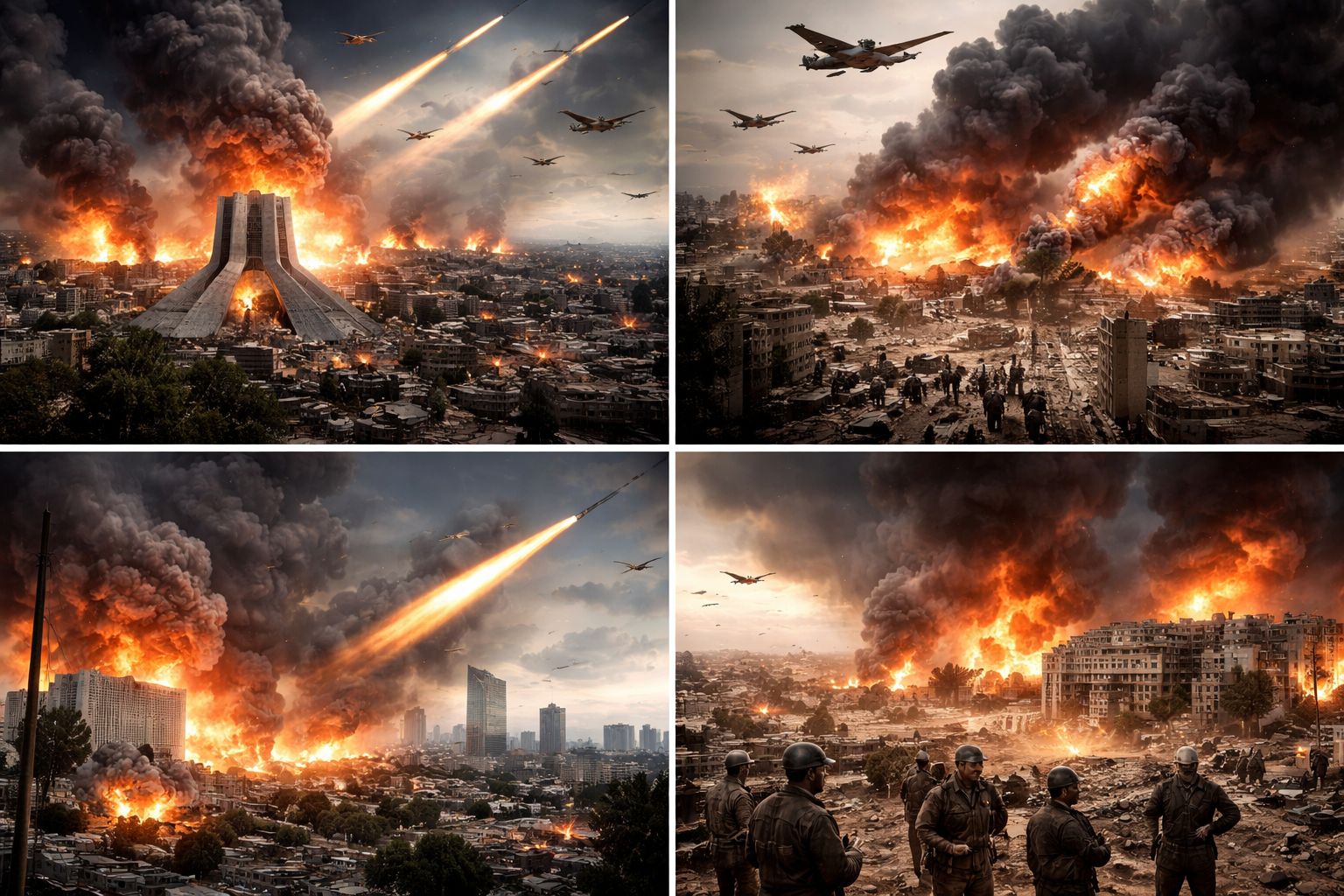
The Middle East is facing an unprecedented escalation as the United States and Israel have launched extensive military strikes across Iran and Lebanon. The region is witnessing a new wave of violence that has already caused thousands of casualties and displaced tens of thousands more.
Rising Tensions: Air Strikes on Tehran and Beirut
Israeli and US air forces simultaneously targeted Tehran and Beirut with heavy strikes aimed at Iranian military installations and Hezbollah positions. According to the Iranian Red Crescent Society, over 500 people have been killed since the onset of the conflict. The strikes on Beirut’s southern suburbs have forced mass evacuations, leaving communities in fear and uncertainty.
The Israeli military confirmed that soldiers have been deployed in southern Lebanon, and new evacuation orders were issued for several locations, signaling a rapid ground mobilization alongside aerial attacks.
Hezbollah and Iran Respond
Hezbollah launched drones into northern Israel in retaliation, while Iran claimed attacks on US air bases in Bahrain, reportedly destroying key command facilities. Iranian forces have also targeted oil infrastructure across the region, including Oman, disrupting maritime operations and raising concerns about global energy supplies.
The situation is spilling over multiple countries, with reported casualties and destruction in at least nine nations across the Middle East. International agencies are warning of an increasingly complex and dangerous humanitarian crisis.
Humanitarian Impact
The United Nations reports that more than 30,000 people have been displaced in Lebanon alone. Iran’s Revolutionary Guards and local emergency responders are struggling to manage the rising death toll, which the Iranian Red Crescent now estimates at 787. Access to medical facilities is limited, and international aid faces severe logistical challenges.
Global and Political Reactions
The conflict has drawn immediate attention worldwide. The United States has ordered non-essential personnel to leave Qatar, Kuwait, Bahrain, Jordan, and Iraq, signaling the gravity of the situation. Israeli Prime Minister Benjamin Netanyahu warned that the campaign against Iran may take time to achieve its objectives, while emphasizing the coordinated US-Israel strategy.
Meanwhile, regional powers are closely monitoring the situation, fearing the conflict could disrupt international trade routes, including the strategic Strait of Hormuz, a key passage for global oil shipments.
Outlook
With both sides showing no signs of de-escalation, the Middle East could face prolonged instability. Analysts warn that the current operations may trigger further regional involvement, drawing neighboring countries deeper into the conflict. Humanitarian organizations stress the urgent need for safe corridors and immediate relief for civilians caught in the crossfire.
The Middle East stands on the brink of a broader war, with thousands of innocent lives at risk and the international community closely watching for potential interventions to prevent a full-scale crisis.