

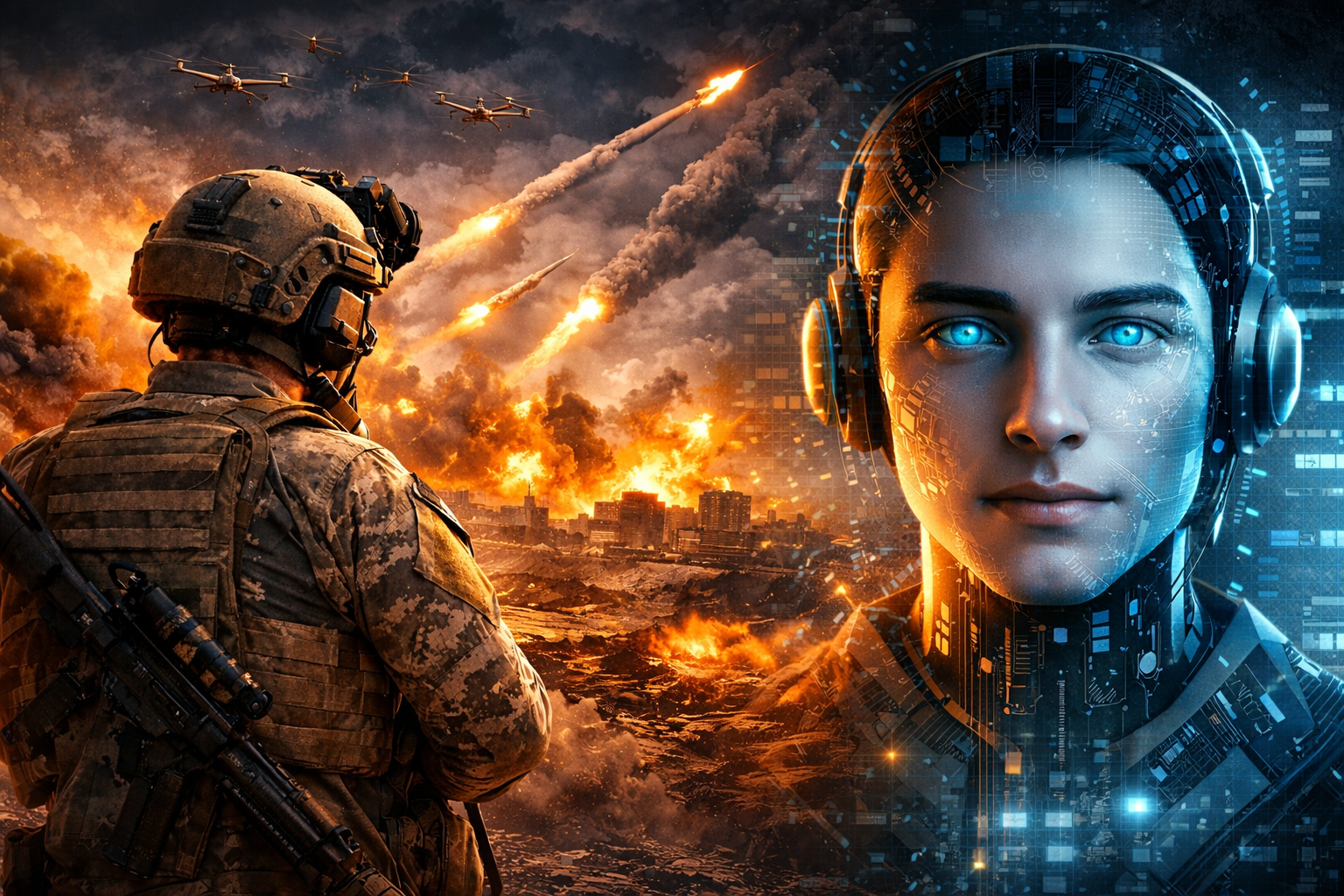
Artificial intelligence is increasingly shaping modern warfare, and a recent controversy involving Claude AI highlights how rapidly this technology is entering military operations. Reports indicate that the United States military used Anthropic’s Claude AI during strikes linked to Iran, despite an earlier order from former US President Donald Trump banning federal agencies from using the technology.
This incident has sparked debate about the growing influence of AI in defense strategy, the limits of political authority over military systems, and the ethical boundaries of artificial intelligence in combat environments.
The situation also reveals how difficult it can be to remove advanced AI tools once they become deeply integrated into military infrastructure.
What Is Claude AI?
Claude AI is a large artificial intelligence model developed by the technology company Anthropic. It is designed to process complex information, analyze massive datasets, and provide intelligent responses to complicated problems.
Unlike traditional software, Claude AI can interpret language, detect patterns in intelligence data, and assist analysts in understanding rapidly changing situations.
In civilian environments, Claude AI is commonly used for research, writing, analysis, and decision support. However, advanced AI systems like Claude can also assist in military contexts where large amounts of information must be processed quickly.
For example, AI can help analysts review satellite imagery, detect unusual activity, and prioritize strategic targets based on available intelligence.
How Claude AI Was Reportedly Used in Iran Strikes
According to reports, the US military used Claude AI as part of its analytical tools during operations connected to Iran.
The AI system was not directly launching weapons or controlling attacks. Instead, it was used in supporting roles such as:
Analyzing intelligence reports
Identifying potential military targets
Processing battlefield data
Supporting operational planning
Modern military operations involve enormous amounts of information from satellites, drones, radar systems, and intelligence networks. AI tools like Claude can analyze this information far faster than human analysts alone.
Because of this capability, artificial intelligence has become an important tool for defense planning and real-time decision making.
Why Trump Ordered a Ban on Claude AI
Former US President Donald Trump reportedly ordered federal agencies to stop using Claude AI due to concerns about national security and control over artificial intelligence technologies.
The concern was that advanced AI systems developed by private technology companies might introduce risks if they were used in sensitive government environments.
Officials worried about several issues:
Data security
Ethical limitations in AI systems
Dependence on private technology companies
Potential misuse of artificial intelligence
Because of these concerns, the administration attempted to halt the use of Claude AI across federal institutions.
However, by the time the ban was announced, some military systems had already integrated the technology into analytical workflows.
Why Removing AI Systems Is Not Easy
One of the biggest challenges revealed by this controversy is how difficult it is to remove artificial intelligence once it becomes embedded in complex systems.
Modern military operations rely on large digital infrastructures where multiple technologies interact. If an AI tool becomes part of intelligence analysis platforms, removing it immediately may not be technically possible.
Experts say that replacing or removing an AI model could take months because it may require:
Rewriting software systems
Replacing analytical tools
Training personnel on new systems
Testing alternative technologies
This is one reason why military operations may continue using certain technologies temporarily even after political decisions are made.
The Growing Role of AI in Warfare
The use of AI tools such as Claude highlights a larger global trend. Militaries around the world are increasingly exploring artificial intelligence for defense purposes.
Artificial intelligence can assist in:
Cybersecurity monitoring
Drone coordination
Intelligence analysis
Missile defense systems
Strategic planning
Countries such as the United States, China, and Russia are investing heavily in AI-based military technologies.
Supporters argue that AI can improve decision speed and reduce human error. Critics, however, warn that relying too heavily on machines in warfare could create serious ethical and security risks.
Ethical Questions About AI in Military Operations
The controversy surrounding Claude AI also raises important ethical questions.
Many experts are concerned about how far AI should be allowed to influence decisions related to conflict and warfare.
Key ethical concerns include:
Who is responsible for AI-assisted decisions
How transparent military AI systems should be
Whether AI should influence lethal force decisions
How to prevent misuse of AI technologies
Technology companies like Anthropic have attempted to place restrictions on how their AI systems can be used, particularly in relation to weapons and surveillance.
However, enforcing these limitations can be complicated once governments or militaries begin integrating the technology into operational systems.
A Warning Sign for the Future of AI Regulation
The Claude AI incident demonstrates how quickly artificial intelligence is becoming part of national security infrastructure.
It also shows the difficulty governments face when trying to regulate emerging technologies that evolve faster than policy frameworks.
As AI becomes more powerful and widely used, governments will likely need clearer regulations regarding:
Military use of AI
Security standards for AI systems
Ethical limitations on automated technologies
Without clear rules and oversight, the line between human decision making and machine-assisted warfare may continue to blur.
Conclusion
The reported use of Claude AI in operations related to Iran highlights a new reality in modern warfare. Artificial intelligence is no longer just a research tool or a commercial product — it is becoming part of national defense strategies.
At the same time, the controversy shows that technological integration can move faster than political decisions. Once advanced systems are embedded into military operations, removing them is not always simple.
As artificial intelligence continues to evolve, governments, military institutions, and technology companies will need to work together to ensure that innovation does not outpace responsibility.
The debate surrounding Claude AI may only be the beginning of a much larger global discussion about the future of AI in warfare.